

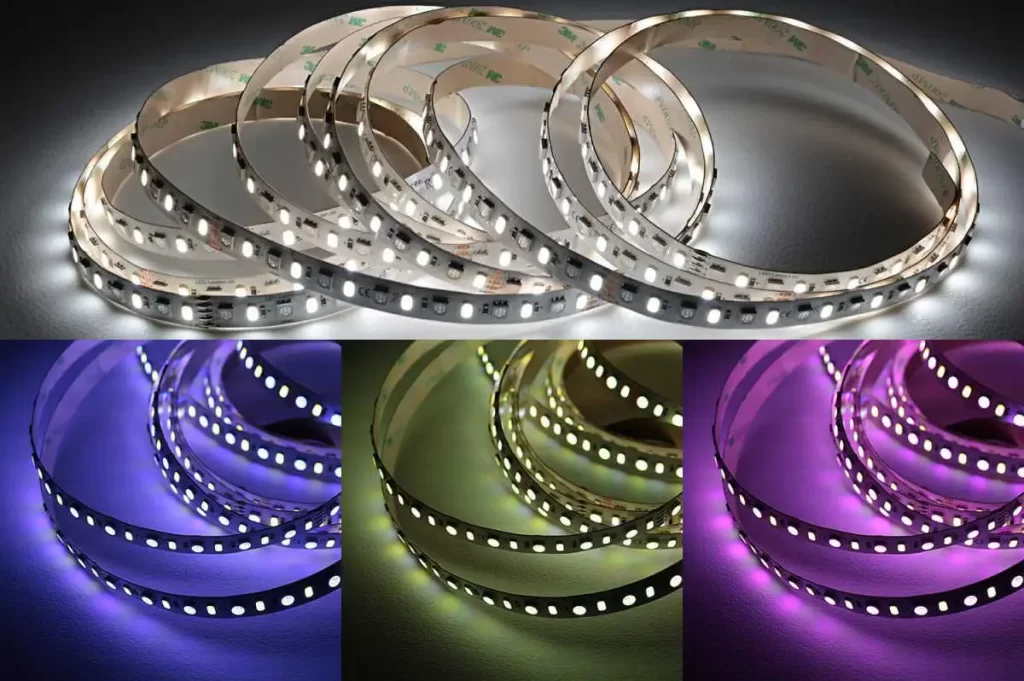
LED lighting has become a staple in home décor, gaming setups, events, and smart homes. Among the most popular options are RGB and RGBIC LED strip lights. While they may sound similar, the two technologies are quite different in how they display colors and patterns.
In this article, we’ll break down RGB vs RGBIC, explore their advantages, and help you decide which is right for your needs.
What Is RGB?
RGB stands for Red, Green, and Blue, the three primary colors of light. RGB LED strips use these three diodes to create a wide spectrum of colors through mixing.
- How it works: Each diode emits red, green, or blue light. By combining these at different intensities, RGB lights can display 16 million colors.
- Control: All LEDs on a strip change color together—you cannot show multiple colors on different sections simultaneously.
- Best for: Simple, uniform lighting effects like ambient lighting or accent décor.
Pros of RGB Lights
- Affordable and widely available.
- Easy to install and control.
- Wide color selection for mood lighting.
Cons of RGB Lights
- Limited to one color at a time across the strip.
- Fewer dynamic effects compared to RGBIC.
- Basic controllers only allow simple patterns.
What Is RGBIC?
RGBIC stands for RGB with Integrated Circuit. These LED strips include a built-in IC chip that allows each segment of the strip to display different colors simultaneously.
- How it works: The integrated circuit controls multiple LEDs individually or in groups, enabling advanced effects like chasing, rainbow, and gradient flows.
- Control: Unlike RGB, RGBIC allows multi-color displays on one strip at the same time.
- Best for: Dynamic, colorful setups like gaming rooms, music sync, or creative decorations.
Pros of RGBIC Lights
- Advanced effects like chasing and rainbow flows.
- Multi-color display on one strip.
- Great for gaming and entertainment setups.
Cons of RGBIC Lights
- Typically more expensive.
- Not cuttable (IC chip prevents trimming to custom lengths).
- Slightly more complex to install and control.
RGB vs RGBIC: Key Differences
| Feature | RGB | RGBIC |
| Color Display | One solid color across the strip | Multiple colors on one strip simultaneously |
| Technology | Simple RGB diodes | RGB diodes + Integrated Circuit (IC) |
| Effects | Basic fades, flashes, static colors | Advanced effects: chasing, gradients, rainbow |
| Customization | Easy to cut and resize | Not cuttable (IC chip limits flexibility) |
| Price | More affordable | Higher cost |
| Best Use | Mood lighting, accent décor | Gaming, parties, entertainment, creative designs |
RGB vs RGBIC in Practical Use
Home Décor
- RGB: Ideal for subtle mood lighting behind TVs, under cabinets, or around furniture.
- RGBIC: Great for statement pieces, accent walls, or dynamic room effects.
Gaming Setups
- RGB: Provides ambient background glow.
- RGBIC: Immersive, multi-color effects synced with gameplay or music.
Events & Parties
- RGB: Good for static themes (one color across venues).
- RGBIC: Perfect for vibrant, moving light shows.
Commercial Displays
- RGB: Simple branding or uniform color backdrops.
- RGBIC: Eye-catching animated advertisements or store lighting.
RGB vs RGBIC: Which Should You Choose?
The choice depends on your goals:
- Choose RGB if:
You want affordable, simple lighting.
You need strip lights that can be cut and customized.
You prefer subtle, uniform colors.
- Choose RGBIC if:
You want advanced effects and multiple colors on one strip.
You’re creating a gaming, entertainment, or party space.
You don’t mind spending a little extra for premium features.
Best RGB LED Strip Brands
- Philips Hue Lightstrip – Premium smart RGB strip, app-controlled.
- Govee RGB Strips – Affordable, easy to install, and reliable.
- Daybetter LED Strips – Budget-friendly with simple remote control.
- Lepro LED Lights – Great for basic home lighting.
Best RGBIC LED Strip Brands
- Govee RGBIC Pro Strips – Industry leader with music sync and app control.
- LIFX Z LED Strips – Wi-Fi-enabled, advanced smart effects.
- Cololight RGBIC Strips – Modular, customizable setups.
- Tapo Smart LED Strips – Affordable smart RGBIC with app integration.
Installation Tips for RGB and RGBIC
- Surface Preparation: Clean and dry the area before sticking strips.
- Power Source: Ensure the power supply matches the strip’s voltage.
- Controller Placement: Keep remotes and Wi-Fi controllers accessible.
- RGB Cut Customization: Trim to fit desired length (RGB only).
- RGBIC Length Management: Plan ahead since they can’t be cut.
Future Trends: RGB vs RGBIC
The LED lighting industry continues to evolve:
- RGB will remain popular due to its affordability and simplicity.
- RGBIC is set to dominate creative spaces with smart features, voice control, and app integrations.
- Future strips may blend both technologies, offering cuttable IC-controlled designs.
Conclusion
When comparing RGB vs RGBIC, the choice comes down to simplicity vs creativity.
- RGB lights are budget-friendly, versatile, and ideal for subtle, uniform lighting.
- RGBIC lights are more advanced, offering multi-color displays and dynamic effects perfect for gaming, entertainment, and eye-catching designs.
If you want affordable mood lighting, go with RGB.
If you want immersive, next-level effects, choose RGBIC.
Both options brighten your space, but RGBIC gives you more control, creativity, and impact.
FAQs
1. What does RGBIC stand for?
RGBIC means RGB with Integrated Circuit, allowing multiple colors to display on one strip at once.
2. Can RGBIC strips be cut?
No, cutting RGBIC strips usually breaks the IC circuit, unlike RGB strips which can be trimmed.
3. Are RGBIC lights better than RGB?
Not necessarily—RGBIC is more advanced, but RGB is better for simple, uniform lighting.
4. Which is cheaper: RGB or RGBIC?
RGB strips are more affordable, while RGBIC strips cost more due to their advanced features.
5. Which is best for gaming rooms?
RGBIC strips are best since they offer dynamic, multi-color effects that sync with gameplay.
Also read: Easy Mini Hot Dog Bun Recipe | Homemade Soft Rolls
