

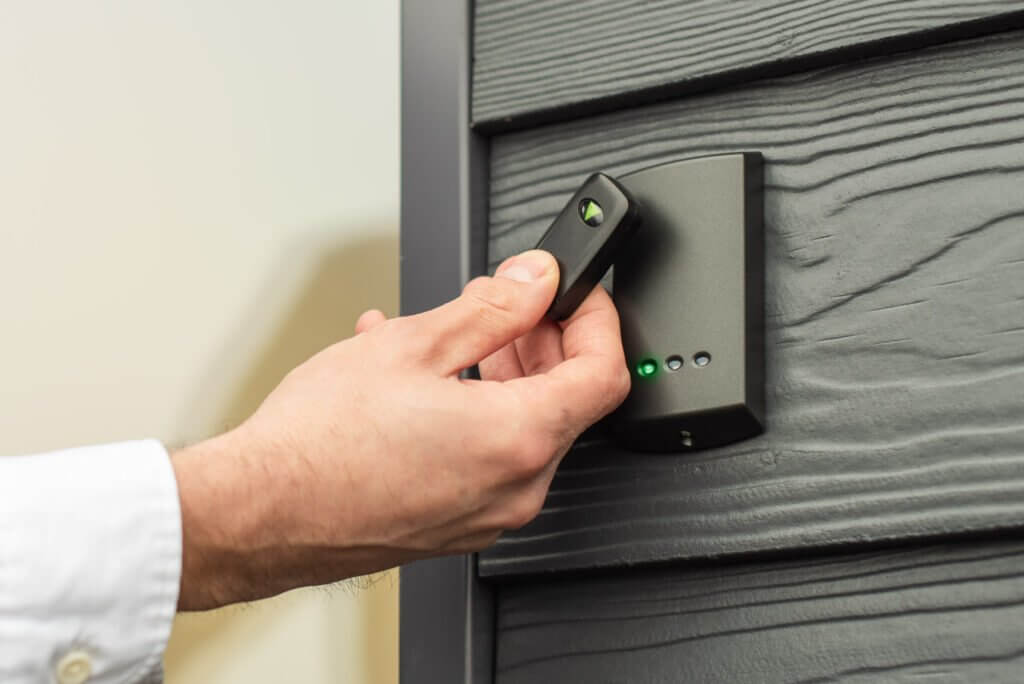
Security and controlled access are essential for any modern building—whether residential, commercial, or mixed-use. Traditional lock-and-key systems are increasingly being replaced by advanced, convenient alternatives. Among the most popular and reliable options is the key fob entry system for buildings.
This article explores how key fob systems work, their benefits, setup requirements, and how to choose the best system for your specific property type.
What Is a Key Fob Entry System for Buildings?
A key fob entry system is an electronic access control system that uses small wireless devices (fobs) to grant authorized users entry into a building or specific areas within it. These systems replace or supplement traditional locks and keys and are commonly used in:
- Apartment complexes
- Office buildings
- Gated communities
- Warehouses and storage facilities
- Schools and hospitals
Each fob is uniquely programmed and can be activated or deactivated instantly via software.
How Does a Key Fob Entry System Work?
Here’s a step-by-step breakdown of how key fob access works:
- Users receive a key fob programmed to their access permissions.
- The user waves or taps the fob near a reader installed at an entry point (door, gate, elevator, etc.).
- The system verifies the fob’s encrypted signal and checks it against the central database.
- If valid, the system unlocks the door automatically.
- Every entry is logged in the system, allowing for real-time monitoring and reporting.
Most systems operate via RFID (Radio Frequency Identification) or NFC (Near-Field Communication) technology.
Benefits of Key Fob Entry Systems for Buildings
Improved Security
Unlike physical keys, key fobs can be:
- Deactivated immediately if lost or stolen
- Tracked by activity logs (who entered and when)
- Restricted by time or location (e.g., access only during business hours)
This prevents unauthorized access and adds an extra layer of accountability.
Convenience for Tenants and Staff
Key fobs are:
- Compact and easy to carry
- Fast—granting access with just a wave
- Hassle-free—no need to fumble with keys or remember codes
Many systems allow remote programming or mobile access in case of lockouts.
Customizable Access Control
Administrators can control:
- Who has access
- Which doors they can open
- At what times access is granted
Perfect for multi-tenant buildings or offices with varying permission levels.
Audit Trails and Monitoring
Key fob systems keep detailed logs of entry events, allowing building managers to:
- Monitor traffic in and out of the building
- Identify suspicious activity
- Review access during security breaches or emergencies
Cost-Effective Over Time
While the initial investment may be higher, key fob systems:
- Reduce rekeying costs
- Lower the risk of theft or damage
- Decrease the need for security personnel in low-risk areas
Types of Key Fob Systems for Buildings
| System Type | Description |
| Standalone Systems | Work locally without a central server—ideal for small buildings or single doors |
| Networked Systems | Cloud-based or wired systems that manage multiple doors from a central dashboard |
| Mobile-Integrated Systems | Combine key fobs with smartphone-based access via Bluetooth or NFC |
Many modern solutions offer hybrid systems that support both fobs and mobile credentials.
Components of a Key Fob Entry System
A complete key fob system typically includes:
- Key Fobs – RFID/NFC-enabled devices assigned to users
- Fob Readers – Installed at doors, gates, or elevators
- Electronic Door Locks – Unlock when authorized signal is received
- Control Panel or Cloud Software – Manages users, logs, and access settings
- Backup Battery or Power Supply – Ensures operation during power outages
Some systems also integrate with video surveillance or intercoms for added security.
Installation Process: What to Expect
Installing a key fob entry system typically involves:
- Site Assessment – Identifying entry points and wiring needs
- Hardware Installation – Mounting readers, locks, and control panels
- System Configuration – Programming user permissions and fob credentials
- Testing & Training – Ensuring functionality and training staff or tenants
- Ongoing Maintenance – Software updates, log monitoring, and fob replacements
Most systems can be installed in 1–3 days, depending on building size and complexity.
How Much Does a Key Fob Entry System Cost?
| Component | Estimated Cost |
| Key fob reader | $300–$800 per door |
| Electronic door lock | $200–$500 |
| Key fobs (per unit) | $3–$10 |
| Control panel or software | $500–$2,000 (one-time or SaaS) |
| Installation labor | $500–$2,000+ (depends on scope) |
Total costs for a small building typically range from $2,000 to $10,000, with larger facilities going higher.
Who Should Use a Key Fob Entry System?
Ideal for:
- Property managers of apartments, condos, and mixed-use buildings
- Businesses looking to secure office entry points
- School campuses and educational facilities
- Healthcare facilities and labs needing HIPAA-compliant access
- Government buildings with sensitive data or restricted areas
Key Fob vs Key Card vs Mobile Access: What’s the Difference?
| Access Type | Pros | Cons |
| Key Fob | Durable, easy to carry | Can be lost or stolen |
| Key Card | Thin, wallet-friendly | More prone to damage |
| Mobile App | Touchless, remote management | Requires smartphones and app downloads |
Many systems offer support for all three for maximum flexibility.
Best Practices for Managing a Key Fob Entry System
- Revoke access immediately for former tenants or employees
- Use multi-factor access (e.g., video or PIN) for sensitive areas
- Back up system data regularly
- Train users on proper use and reporting lost fobs
- Schedule periodic audits of access logs
Conclusion
A key fob entry system for buildings offers unmatched convenience, scalability, and security. Whether you manage a commercial office or a residential complex, implementing a key fob system simplifies access control while providing peace of mind.
With features like remote management, audit trails, and customizable permissions, it’s a future-proof solution designed for safety and efficiency. By investing in the right system, you’re not just securing a door—you’re protecting your people, property, and reputation.
FAQs
1. Can key fob systems be hacked?
While no system is completely hack-proof, encrypted key fob systems are highly secure when properly installed and managed. Regular software updates and monitoring help prevent breaches.
2. What happens if someone loses their key fob?
You can instantly deactivate the lost fob in the system to prevent unauthorized access and issue a replacement.
3. Are key fob entry systems expensive to maintain?
Not typically. Routine costs include occasional fob replacements and software updates. Most modern systems are low-maintenance.
4. Can I install a key fob system myself?
DIY kits exist, but professional installation is recommended for commercial or multi-door setups to ensure proper wiring, programming, and security compliance.
5. Do key fob systems work during a power outage?
Yes—most systems come with a battery backup to maintain access functionality in emergencies.
Also read: How Many Pay Weeks in a Year? A Complete Guide to Payroll Schedules and Paychecks
