

Tucked away in the rugged terrains of the American West, Fairview Peak is more than just a scenic hiking destination—it’s a geological marvel and a historical landmark with deep roots in natural science and human activity. Located in Nevada’s Clan Alpine Mountains, this peak isn’t as widely known as other summits, but for geologists, hikers, and history buffs alike, it holds extraordinary significance.
From massive earthquakes to mineral-rich formations, Fairview Peak tells a powerful story about the earth’s transformation over millennia. In this article, we’ll uncover 9 fascinating facts about the geology and history of Fairview Peak, giving you an even deeper appreciation for this remarkable location.
1. Fairview Peak Was Shaped by a Major Earthquake in 1954
One of the most dramatic events in the peak’s history occurred on December 16, 1954, when two massive earthquakes—measuring 7.3 and 6.9 on the Richter scale—struck the region near Fairview Peak and nearby Dixie Valley.
These quakes produced visible fault scarps, or breaks in the earth’s surface, that are still evident today.
Key takeaways:
Part of the Basin and Range fault system
Faults shifted up to 20 feet in places
One of the most well-documented surface faulting events in U.S. history
Geologists around the world still study Fairview Peak to better understand fault line behavior and seismic risks.
2. It Sits in the Basin and Range Province
Fairview Peak is part of the Basin and Range Province, a vast geologic region stretching from eastern California to central Utah. This area is characterized by alternating mountain ranges and valleys formed by crustal extension.
Why this matters:
Crust is being stretched, forming faults and rift valleys
Fairview Peak’s elevation and shape are due to tectonic uplift
It offers insight into continental rifting processes
You’ll notice the steep-sided ridges and deep valleys—a hallmark of the region’s unique geological activity.
3. The Area Features Multiple Fault Scarps
After the 1954 earthquakes, researchers recorded more than 50 kilometers of surface faulting around Fairview Peak. These fault scarps are still visible and are considered textbook examples of normal faulting.
Features include:
Vertical displacements of 2 to 4 meters
Horizontal movements along fault planes
Clear geological record of recent seismic activity
These scarps make Fairview Peak a popular destination for field geologists and geology students.
4. It’s Rich in Volcanic and Sedimentary Rock Formations
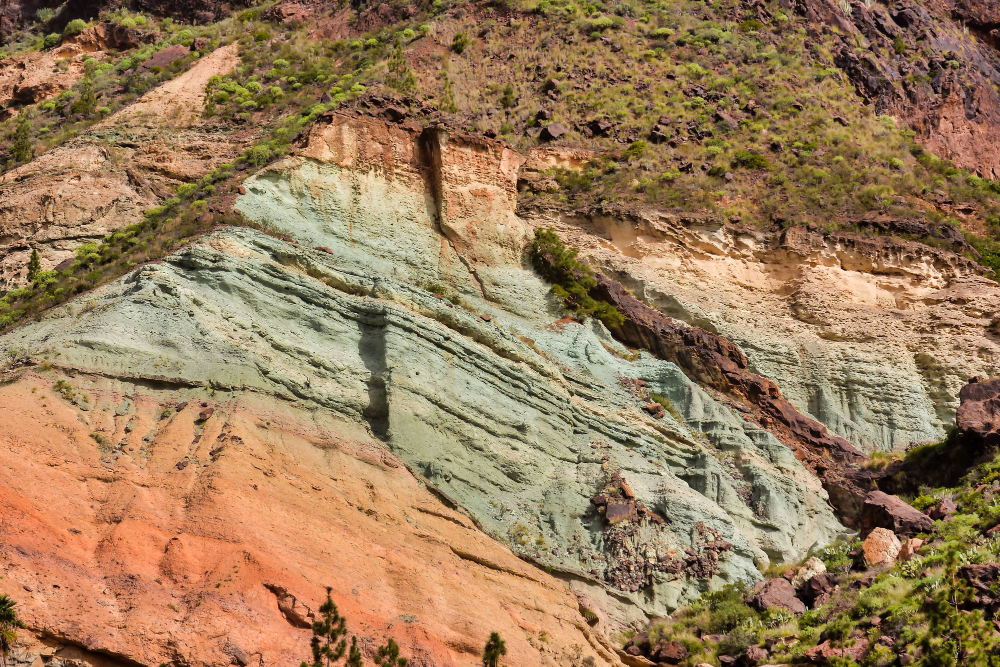
The geology of Fairview Peak is composed of a diverse mix of volcanic and sedimentary rocks, including tuffs, basalt flows, and sandstone layers. These rock types offer a glimpse into the region’s volcanic past and subsequent erosion.
Common rock types:
Rhyolite and andesite from ancient volcanic eruptions
Sandstone and shale from prehistoric lake beds
Basalt from more recent lava flows
This variety makes the area an open book of geologic time, appealing to both amateur and professional rock hounds.
5. The Name Comes from a Nearby Mining Town
Fairview Peak gets its name from the historic mining town of Fairview, established in the early 1900s during a short-lived silver boom. The town thrived for a brief period before being abandoned.
Historical highlights:
Fairview had banks, saloons, and even a newspaper
At its peak, it had over 2,000 residents
Now a ghost town, remnants can still be visited today
The mining history of the area ties in closely with its geology, as mineral-rich veins in the surrounding hills attracted prospectors from across the country.
6. Fairview Peak Was Once a Strategic Military Test Site
During the mid-20th century, the area around Fairview Peak was used by the U.S. military for training and testing due to its remote location and open landscape.
Significance:
Proximity to the Naval Air Station Fallon
Ideal terrain for field maneuvers and aviation testing
Contributed to Cold War military strategy
Although not widely publicized, this adds a layer of modern history to the region’s already fascinating past.
7. The Peak Offers Panoramic Views of Nevada’s Desert Terrain
At an elevation of 8,214 feet, Fairview Peak stands tall over the surrounding valleys and plateaus, offering breathtaking views of the Nevada desert, alkali flats, and neighboring mountain ranges.
Perfect for:
Hikers seeking solitude and challenging trails
Amateur photographers chasing desert sunrises
Stargazers looking for dark skies with zero light pollution
Because of its remote location, the peak remains uncrowded, making it an ideal escape for nature lovers.
8. The Region Is Home to Unique Flora and Fauna
Fairview Peak’s ecosystem includes a mix of high desert vegetation and hardy wildlife. The elevation gradient supports species not commonly found in lower valleys.
What you might encounter:
Sagebrush, pinyon pine, and juniper trees
Jackrabbits, coyotes, and desert bighorn sheep
Raptors like golden eagles and hawks
The diverse habitats created by fault lines and varied geology support an equally diverse range of life.
9. It’s a Popular Field Study Site for Earth Science Education
Because of its accessible fault scarps, diverse rock layers, and well-preserved earthquake features, Fairview Peak is often visited by university geology departments and research institutions.
Educational relevance:
Real-world examples of seismic displacement
Ideal for teaching structural geology
Frequently cited in textbooks and academic journals
It continues to be a living classroom for the next generation of scientists and earth explorers.
Conclusion: Fairview Peak—A Hidden Giant of Geology and History
While it may not have the fame of Mount Whitney or the tourism of Zion, Fairview Peak quietly stands as one of the most geologically and historically significant sites in Nevada. From the earth-shattering quakes of 1954 to the ghost town origins and Cold War connections, this peak tells a story that spans millions of years.
Whether you’re a hiker seeking dramatic landscapes or a geologist drawn to tectonic marvels, Fairview Peak delivers an unforgettable experience packed with knowledge, solitude, and discovery.
FAQs
1. Where is Fairview Peak located?
Fairview Peak is located in Churchill County, Nevada, within the Clan Alpine Mountains, east of Fallon and west of the Stillwater Range.
2. Can I hike Fairview Peak?
Yes! There are several off-trail and 4×4 routes leading to the summit, but hikers should be well-prepared as it is a remote and rugged location with no developed facilities.
3. What makes Fairview Peak geologically important?
The area is famous for the 1954 earthquakes, which left visible surface faulting—a rare and highly studied example of tectonic activity in the U.S.
4. Are there still remnants of the Fairview ghost town?
Yes. You can visit the ruins of the old mining town, including stone foundations and mine shafts, located just west of the peak.
5. Is Fairview Peak safe to visit?
Yes, but due to its remote setting, visitors should bring adequate water, GPS, sun protection, and inform someone of their plans. Weather can change quickly, and cell service is unreliable.
Also read : How to Make Cranberry Aioli: A Perfect Holiday Condiment
