

The term “T scale” can mean different things depending on the context. In psychology and statistics, a T scale refers to a standardized scoring system that transforms raw test scores into a scale with a mean of 50 and a standard deviation of 10. This makes test results easier to interpret across individuals and groups.
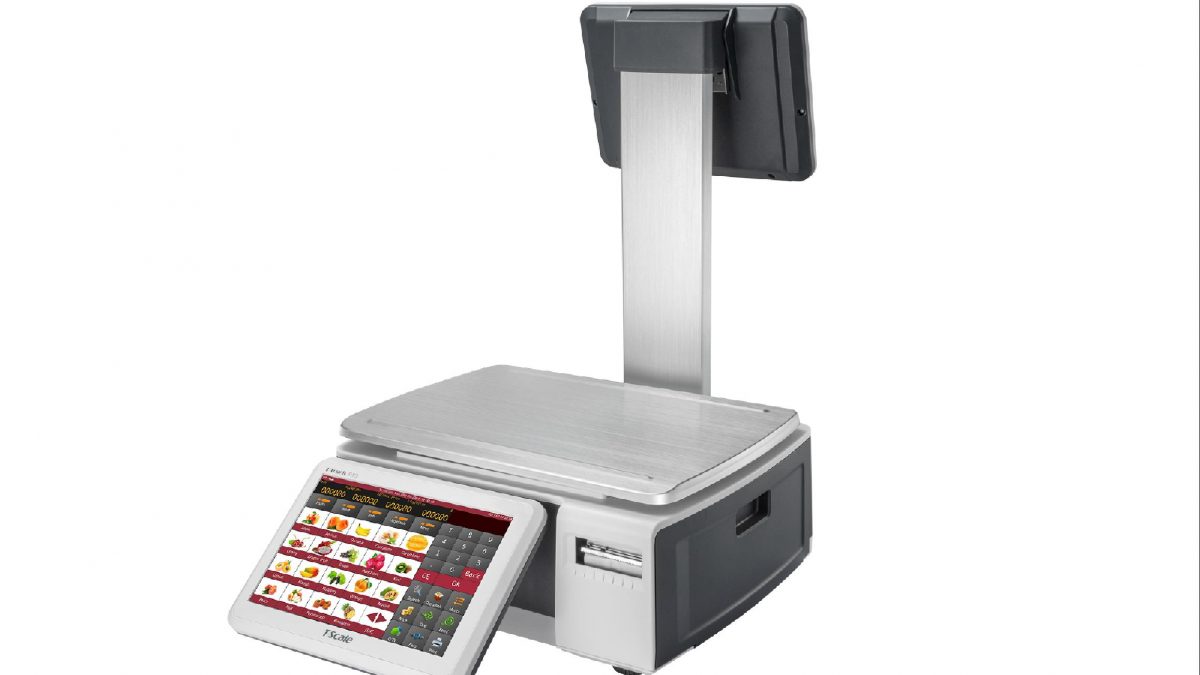
In industrial settings, a T scale may also refer to a weighing device used for precise measurements. Regardless of the context, understanding the meaning and application of the T scale is essential for students, researchers, professionals, and consumers alike.
This article will break down the definition, history, uses, calculations, and benefits of the T scale, while also exploring its applications in psychology, education, health, and weighing technology.
What Is a T Scale in Statistics and Psychology?
A T scale is a type of standard score commonly used in psychological testing and assessments.
- It is a linear transformation of a z-score.
- By definition:
Mean = 50
Standard deviation = 10
This transformation allows test scores to be compared across populations, even when the raw scores differ.
Formula:
T=50+10zT = 50 + 10z
where z is the z-score of the raw score.
Why Use the T Scale?
- Ease of Interpretation – Instead of dealing with negative z-scores or decimals, the T scale uses whole numbers centered at 50.
- Comparability – Different tests can be compared more easily.
- Clarity – A score of 50 always means “average.”
- Clinical Usefulness – Widely adopted in psychological assessments like personality inventories and intelligence tests.
Examples of T Scale Applications
Psychological Testing
- Personality inventories like the MMPI (Minnesota Multiphasic Personality Inventory) report results in T scores.
- Allows psychologists to quickly determine if a trait or behavior falls within the normal range.
Educational Assessment
- Standardized tests (aptitude, IQ, and achievement tests) often convert raw scores into T scores for reporting.
Medical and Health Research
- Used in quality of life assessments, depression scales, and other self-report health measures.
Sports and Performance Measurement
- T scores may be used in performance benchmarks to normalize results across athletes.
Interpreting T Scores
Since T scores are standardized:
- 50 = Average
- 60 = 1 standard deviation above average
- 40 = 1 standard deviation below average
- 70 = 2 standard deviations above average
Ranges:
- Below 40: Low
- 40–60: Average
- Above 60: High
T Scale vs. Other Scales
| Scale | Mean | Standard Deviation | Notes |
| Z-Score | 0 | 1 | Raw standard score |
| T Scale | 50 | 10 | Easier to interpret |
| IQ Scale | 100 | 15 | Common in intelligence testing |
| Stanines | 5 | 2 | Divides distribution into nine categories |
Advantages of the T Scale
- Universality – Widely recognized in psychology and research.
- Precision – Uses continuous numbers rather than categories.
- Simplification – Eliminates negatives and fractions from z-scores.
- Communication – Easier for professionals to explain results to patients and clients.
Limitations of the T Scale
- Requires Statistical Knowledge – Must calculate z-scores first.
- Relative Measure – Does not provide absolute performance, only relative standing.
- Cultural Bias – As with any standardized testing, cultural context may affect fairness.
How to Calculate a T Score Step by Step
Example:
A student scores 85 on a test. The class mean is 70, with a standard deviation of 5.
- Calculate z-score:
z=X−μσ=85−705=3z = \frac{X – \mu}{\sigma} = \frac{85 – 70}{5} = 3
- Convert to T score:
T=50+10z=50+10(3)=80T = 50 + 10z = 50 + 10(3) = 80
Interpretation: The student scored 3 SD above average, placing them in the top range.
Alternative Context: T Scale as a Weighing Device
Outside of psychology, T scale can also refer to a type of weighing scale, often used in:
- Industrial applications – heavy-duty weighing.
- Laboratories – precision measurement.
- Retail – compact tabletop T-scales for weighing goods.
These scales are valued for their accuracy, durability, and efficiency, particularly in manufacturing and logistics.
Buying Guide: Choosing the Right T Scale (Weighing Device)
If you’re searching for a T scale for weighing, consider the following factors:
- Capacity – Light duty (up to 10kg) vs. heavy-duty (100kg+).
- Accuracy – How precise do the measurements need to be?
- Digital vs. Analog – Digital offers better readability and features.
- Portability – Compact scales for retail vs. fixed industrial models.
- Durability – Materials like stainless steel for long-term use.
SEO Variations of T Scale
To maximize reach, here are keyword variations and related terms:
- What is a T scale in psychology?
- T scale score vs z-score
- T scale in statistics explained
- T scale balance or weighing machine
- How to interpret T scale results
Conclusion
The T scale plays an essential role in both psychometric testing and industrial weighing applications. In statistics and psychology, it provides a standardized way to compare individual performance against the norm, with a mean of 50 and standard deviation of 10. In industry, a T scale refers to accurate weighing machines that ensure efficiency and reliability.
Understanding how the T scale works, its applications, and how to interpret results ensures that whether you’re a student, researcher, psychologist, or consumer, you can make better, more informed decisions.
FAQs
1. What is a T scale in psychology?
It’s a standardized scoring system with a mean of 50 and a standard deviation of 10, used to interpret test scores.
2. How do you calculate a T score?
First calculate the z-score, then convert it using the formula: T = 50 + 10z.
3. What is the difference between a T scale and a z-score?
A z-score has a mean of 0 and SD of 1, while a T scale has a mean of 50 and SD of 10 for easier interpretation.
4. Can T scale also mean a weighing device?
Yes. In industrial and retail contexts, T scale refers to a weighing machine.
5. Why is the T scale important in testing?
It simplifies results, avoids negatives, and makes scores easier to communicate in clinical and educational settings.
Also read: Lane Rogers Porn: Biography, Career, and Filmography
